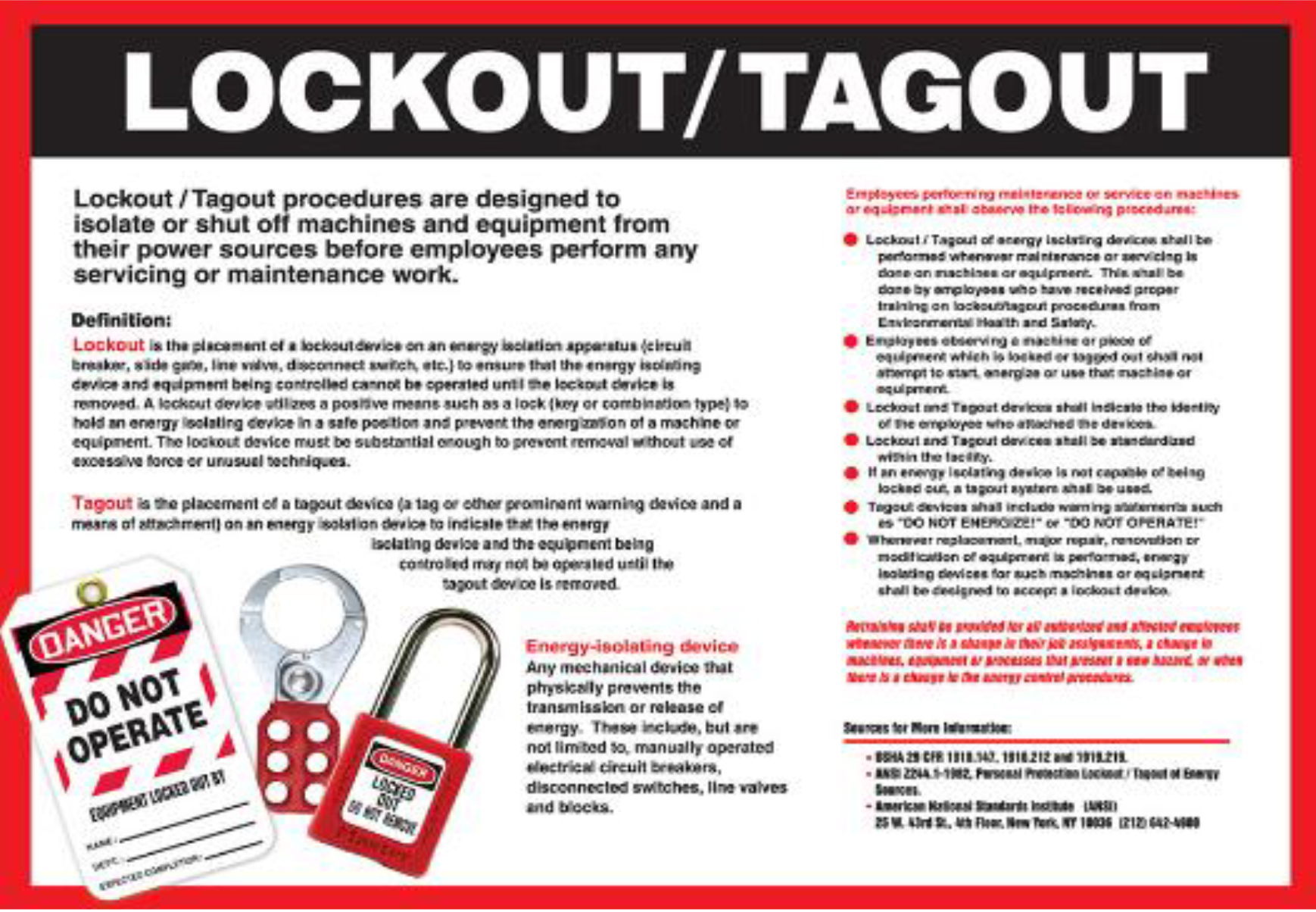
Electrical systems don’t shut down quietly. A single misstep during maintenance—like assuming a circuit is dead—can lead to arc flashes, electrocution, or worse. That’s where the electrical lockout tagout procedure PDF becomes more than just a document; it’s a lifeline. Workers rely on these standardized, printable protocols to systematically de-energize, isolate, and secure electrical equipment before any service work begins.
Yet too many teams treat LOTO PDFs as paperwork rather than a living safety process. The result? Complacency, incomplete procedures, or reliance on memory instead of documented steps. This article breaks down what a truly effective electrical lockout tagout procedure PDF should include, how to implement it, and where common failures occur—even in experienced teams.
Why an Electrical Lockout Tagout Procedure PDF Matters
A lockout tagout (LOTO) procedure isn’t optional—it’s a requirement under OSHA 29 CFR 1910.147. But while the regulation mandates written procedures, many organizations stop at a generic form downloaded from the internet. That’s a critical mistake.
Electrical systems vary drastically: a 120V control panel isn’t the same as a 480V motor control center. A one-size-fits-all PDF won’t protect workers when the energy source is high-voltage, capacitive, or re-energized remotely.
An effective electrical lockout tagout procedure PDF does three things:
- Identifies all energy sources – including primary, secondary, and stored energy (e.g., capacitors, springs).
- Specifies isolation points – exact breakers, disconnects, or switches to lock.
- Defines verification steps – how to test for zero energy using a meter or tester.
Without these, the PDF is just decoration.
For example, a maintenance technician servicing a conveyor system assumed the main disconnect was the only power source. The LOTO PDF didn’t mention a backup DC drive supply. When he opened the panel, residual voltage caused a flash injury. The root cause? An incomplete, vague procedure.
Your electrical LOTO PDF must reflect the actual equipment—not a template version that skips critical details.
Key Sections Every Electrical LOTO PDF Should Include
A robust electrical lockout tagout procedure PDF isn’t just a checklist. It’s a step-by-step roadmap that leaves no room for guesswork. Here’s what must be in every version:
#### 1. Equipment Identification Start with a clear name, location, and unique ID for the machine or system. Use photos or diagrams when possible. Example: - Equipment: 20HP Centrifugal Pump – North Wing HVAC System - Location: Mechanical Room B2, Floor 2 - ID Number: PMP-207
This prevents confusion when multiple similar units exist.
#### 2. Energy Sources List List every potential energy source. For electrical systems, that means:
- Main AC power (line voltage)
- Control circuits (120V, 24V)
- Backup batteries or UPS
- Capacitors that store charge
- Remote monitoring/control systems (PLC signals)
Example: A CNC machine might have power from a 3-phase disconnect, a 24V control circuit, and a servo drive with capacitors. All must be isolated.
#### 3. Lockout Points Specify exactly where locks and tags go. Include:
- Breaker numbers
- Disconnect switch labels
- Terminal block locations
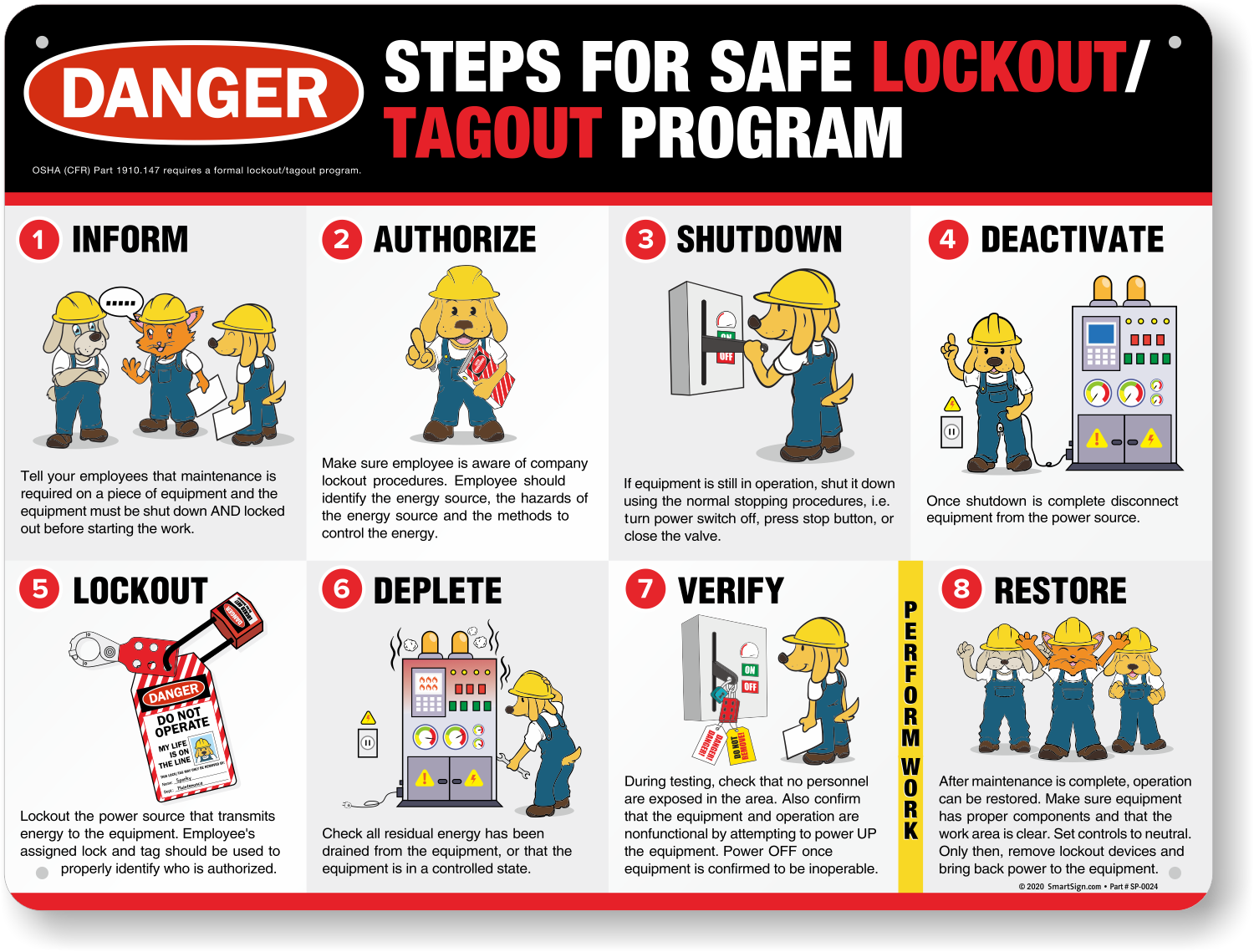
Use standardized lockout devices: hasps, circuit breaker locks, plug locks. Never rely on tags alone—tags warn, but locks prevent.
#### 4. Step-by-Step Isolation Process This is the core. Break it down:
- Notify all affected employees.
- Shut down the equipment using normal controls.
- Open disconnects or breakers.
- Apply lockout devices with assigned worker locks.
- Tag each lock with name, date, and reason.
- Release stored energy (discharge capacitors, bleed lines).
- Verify zero energy using a tested voltage meter.
Verification is non-negotiable. A multimeter must confirm no voltage on all phases and to ground.
#### 5. Restoration Steps Equally important: how to safely re-energize. Include:
- Confirming all tools are removed
- Verifying personnel are clear
- Removing locks only by the person who applied them
- Re-energizing in reverse order
Failure here causes many accidents. Workers often re-energize before others exit confined spaces.
Common Mistakes in Electrical LOTO PDFs
Even teams with PDF procedures fail due to subtle flaws. Watch for these:
- Generic language: “Isolate the power source” instead of “Open and lock Main Breaker MB-3 in Panel P2.”
- Missing stored energy: Ignoring capacitors or control circuits that can re-energize.
- No verification step: Assuming power is off without testing.
- Shared locks: Using master or group locks without individual accountability.
- Outdated diagrams: PDFs based on old equipment layouts.
One plant had a LOTO PDF for a compressor that listed “turn off breaker” but didn’t specify which of five breakers. Workers guessed. Twice, the wrong unit was locked, leading to near-misses.
A good PDF eliminates ambiguity. Use photos, wiring diagrams, and exact labels.
How to Create a Custom Electrical LOTO PDF
Start with a site-specific audit. Walk through each machine and document:
- All energy inputs
- Isolation points
- Stored energy risks
- Affected employees
Then draft the procedure using a consistent format. Tools like lockout tagout software or safety management platforms can help generate PDFs with standardized templates.
Best practices:
- Use company branding and headers.
- Include a revision date and approval signature.
- Store PDFs digitally with backups—accessible on tablets in the field.
- Print and post near equipment as a quick reference.
Train all authorized employees on how to use the PDF—not just read it, but follow it step by step during a live demo.
Top 5 Tools for Generating Electrical LOTO Procedure PDFs
Creating compliant, equipment-specific LOTO PDFs doesn’t have to be manual. These platforms streamline the process:
| Tool | Key Features | Best For |
|---|---|---|
| Lockout Tagout Pro | Drag-and-drop templates, PDF export, mobile access | Small to mid-sized teams |
| SafetyChain LOTO | Integration with CMMS, audit trails, cloud storage | Manufacturing plants |
| ProLockout | Equipment database, barcode labeling, workflow builder | Facilities with 50+ machines |
| EHS Insight | Risk assessment tools, compliance tracking, reporting | Enterprise safety programs |
| LockOut/TagOut Manager by Seton | Pre-built electrical templates, OSHA alignment, print-on-demand | Quick deployment |
Each lets you build, store, and distribute electrical lockout tagout procedure PDFs with minimal effort. Some even sync with mobile devices so technicians can pull up the correct PDF on-site.

But no tool replaces accuracy. Always validate procedures with a qualified electrician.
Real-World Use Cases: Where LOTO PDFs Prevented Disasters
Case 1: Hospital Maintenance Team A biomedical technician needed to service an MRI machine. The LOTO PDF listed isolation of the main supply, secondary UPS, and magnetic coil discharge. He followed each step, verified zero voltage, and avoided exposure to residual energy—something not obvious from the machine’s exterior.
Case 2: Automotive Assembly Line During a weekend repair, a supervisor used the LOTO PDF for a robotic arm. The document included a note: “Confirm PLC is in manual mode before lockout.” That step prevented an automated restart that could have crushed a technician inside the cell.
These aren’t theoretical. They’re proof that a well-crafted electrical lockout tagout procedure PDF directly prevents injury.
Making Your LOTO PDF Actionable and Compliant
A PDF that sits in a binder is useless. To make it work:
- Train everyone – authorized employees must practice using the PDF.
- Audit regularly – walk through 2–3 procedures quarterly with a safety officer.
- Update after changes – new equipment, rewiring, or layout shifts require revised PDFs.
- Enforce discipline – no deviations, no “this one time.”
OSHA doesn’t fine for missing PDFs alone—they cite when the absence leads to exposure. But having a strong, accessible electrical lockout tagout procedure PDF demonstrates due diligence.
Print it. Post it. Use it. Every time.
A true electrical lockout tagout procedure PDF isn’t a formality. It’s a precision tool—engineered to eliminate risk, enforce consistency, and protect lives. Start by auditing your current procedures. Replace vague templates with equipment-specific documents. Use digital tools to maintain accuracy, and train teams to treat every step as mandatory. When the PDF is clear, complete, and followed without exception, it becomes the most important document in your safety program.
FAQ
What should be included in an electrical lockout tagout procedure PDF? It must list the equipment, all energy sources, isolation points, step-by-step lockout and verification procedures, and safe re-energization steps.
Can a LOTO PDF be digital instead of printed? Yes, if workers can access it reliably on mobile devices during maintenance. OSHA allows electronic formats as long as they’re available when needed.
Who should create the electrical LOTO procedure PDF? Qualified personnel familiar with the equipment, typically a safety officer or lead electrician, with input from maintenance teams.
How often should LOTO PDFs be reviewed? At least annually, or whenever equipment is modified, repaired, or relocated.
Do all employees need to read the LOTO PDF? Authorized employees who perform maintenance must be trained on it. Affected employees should understand its purpose and restrictions.
Can one PDF cover multiple machines? Only if they are identical in design and energy sources. Otherwise, each machine needs its own customized procedure.
What happens if a LOTO PDF is missing during an OSHA inspection? It results in citations under 1910.147(c)(4), with fines starting at thousands of dollars per violation, especially if procedures aren’t documented.
FAQ
What should you look for in Electrical Lockout Tagout Procedure PDF Guide? Focus on relevance, practical value, and how well the solution matches real user intent.
Is Electrical Lockout Tagout Procedure PDF Guide suitable for beginners? That depends on the workflow, but a clear step-by-step approach usually makes it easier to start.
How do you compare options around Electrical Lockout Tagout Procedure PDF Guide? Compare features, trust signals, limitations, pricing, and ease of implementation.
What mistakes should you avoid? Avoid generic choices, weak validation, and decisions based only on marketing claims.
What is the next best step? Shortlist the most relevant options, validate them quickly, and refine from real-world results.