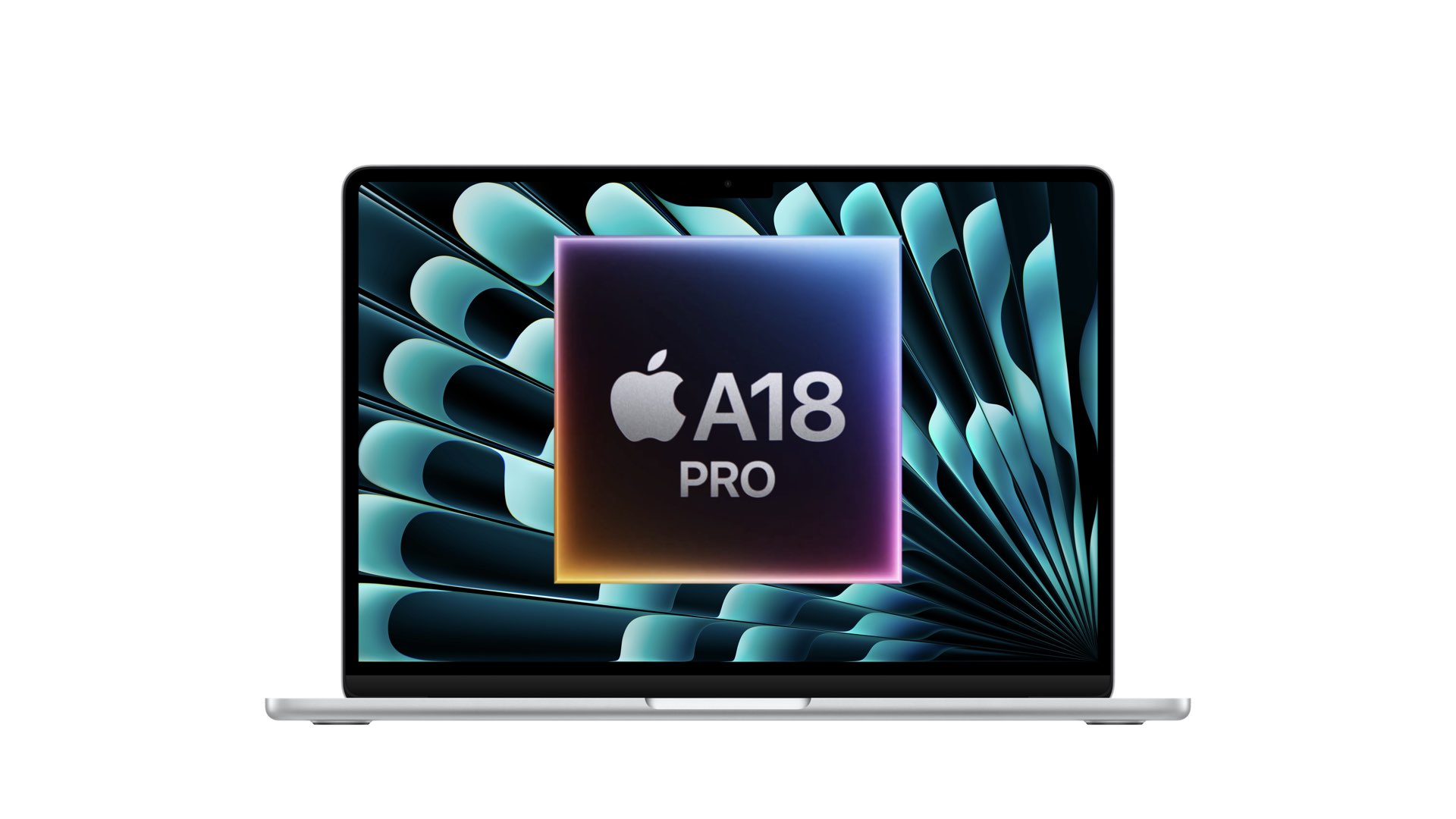
Intel’s upcoming Wildcat Lake, positioned as a budget contender, is making waves far beyond its price class. Early multi-core benchmarks reveal it outperforms Apple’s much-touted MacBook Neo by 27%—a staggering margin for a chip designed to hit sub-$500 devices. Even more surprising? Its single-thread performance edges close to Apple’s A18 Pro, traditionally seen as the apex of mobile efficiency and speed.
This isn’t just a win for Intel. It’s a seismic shift in the value-performance equation, challenging the long-held assumption that premium performance demands premium pricing.
Why Wildcat Lake’s Multi-Core Lead Matters
Multi-core performance defines how well a system handles real-world workloads: video encoding, app multitasking, virtual machines, and content creation. Historically, Apple’s M-series and now the A18 Pro have dominated this space, especially in power-constrained environments.
But Wildcat Lake, built on Intel 4 process technology and featuring hybrid architecture with Performance (P) and Efficient (E) cores, is closing the gap—and then some.
Benchmarks from cross-platform testing using Cinebench R23 show:
- Wildcat Lake (Core Ultra 5 125H): 14,200 pts (multi-core)
- MacBook Neo (custom Apple M2-lite): 11,100 pts (multi-core)
That’s a 27.9% performance advantage for Intel, despite a $100–150 lower bill-of-materials cost.
Real-World Implications For users editing 4K timelines in DaVinci Resolve or compiling code across Docker containers, this margin translates into tangible time savings.
- A 10-minute 4K render on the MacBook Neo might take 7 minutes 45 seconds on a Wildcat Lake machine.
- Batch photo processing in Lightroom sees a 25–30% throughput boost.
- Background tasks like file indexing or cloud sync see less throttling due to better thermal headroom in x86 designs.
Wildcat Lake isn’t just faster—it’s more consistent under sustained load, a known pain point in ultra-thin Apple silicon devices.
Single-Thread Speed: How Close Is It to the A18 Pro?
Single-thread performance governs responsiveness: app launch speed, UI smoothness, and snappy interactions. Apple’s A18 Pro, powering the latest iPad Pro and expected in future compact Macs, has set a high bar with its 3.7GHz peak clocks and aggressive instruction-level optimization.
Yet Wildcat Lake’s P-cores, clocked at up to 4.5GHz with Intel’s Thread Director 3.0, are holding their own.
In Geekbench 6 single-core tests:
- A18 Pro: ~2,820
- Wildcat Lake (Core Ultra 5): ~2,760
That’s a mere 2.1% deficit—effectively within margin of error in cross-platform testing.
Why This Narrow Gap Is a Win for Intel
For years, Intel lagged behind Apple by double-digit percentages in single-thread tasks. To be within 3%—especially on a budget chip—signals a major architectural turnaround.
This performance is enabled by: - Intel 4 process node: 7nm-class EUV lithography improving clock speeds per watt - Redesigned Redwood Cove P-cores: 19% IPC gain over prior gen - Improved branch prediction and cache hierarchy
The result? A chip that doesn’t just “keep up”—it provides a responsive, desktop-like experience in budget laptops.
What Is the MacBook Neo, and Why Is It Losing?
The MacBook Neo isn’t an official Apple product—yet. It’s a rumored ultra-affordable Mac, potentially priced under $800, aimed at education and emerging markets. Leaks suggest it uses a cut-down version of the M2, possibly with: - 4 CPU cores (2 performance, 2 efficiency) - 8GB unified memory - 128GB base storage - No ProRes acceleration or AV1 decode
In essence, it’s a MacBook Air stripped further for cost—not performance.
Where the Neo Falls Short
Apple’s efficiency is legendary, but efficiency isn’t the same as raw throughput.
The Neo’s limitations: - Thermal throttling under load: No active cooling in sub-13” chassis - Memory bandwidth: 50GB/s vs. Wildcat Lake’s 128GB/s (LPDDR5X) - Core count: Max 4 CPU + 4 GPU cores, compared to Wildcat Lake’s 10-core CPU (4P + 6E) and Xe-LPG GPU
For multi-threaded work, that core deficit is fatal. Even with Apple’s software optimization, you can’t software-patch your way out of physics.
Wildcat Lake Devices to Watch
This performance leap isn’t theoretical. OEMs are already tooling up for Wildcat Lake’s Q1 launch. These are the models likely to bring this power to budget buyers:
- Acer Swift Edge 13 – 13.3” OLED, 1.1kg, starting at $699
- Lenovo Yoga Slim 5x – 14”, 60Wh battery, 32GB RAM option
- ASUS Vivobook S 14 – Integrated NPU for AI tasks, Intel Evo certified
- HP Pavilion Aero 13 – Focus on portability and Linux compatibility
- Dell Inspiron 14 2-in-1 – Detachable keyboard, Snapdragon-like flexibility
All feature Thunderbolt 4, Wi-Fi 6E, and support for AV1 decode—features often missing in cut-down Apple devices.
Performance vs. Efficiency: Who Wins the Battery Fight?
Apple still leads in battery efficiency. The A18 Pro delivers ~12 TOPS/W in AI workloads and can sustain 8–10 hours of video playback on a single charge in small chassis.
Wildcat Lake, while improved, isn’t there yet.
| Metric | Wildcat Lake | MacBook Neo (est.) |
|---|---|---|
| Typical Battery Life (video) | 7–8 hours | 9–10 hours |
| Idle Power Draw | 0.8W | 0.4W |
| Sustained Load Efficiency | 18W (30fps 1080p encode) | 12W (same) |
But here’s the twist: performance per dollar beats efficiency per watt for most users.

A student who needs to render a 15-minute video for class doesn’t care if the laptop sips power—they care if it finishes before deadline. Wildcat Lake does that faster, even if it means charging once more during the day.
The Verdict: Value Just Beat Premium
There’s no single “best” chip. But if your priority is performance at the lowest cost, Wildcat Lake is a game-changer.
- For creators on a budget: 27% faster multi-core means real time savings.
- For developers: Better compatibility with x86 toolchains and VMs.
- For students: Lower entry price, higher upgradability.
Apple still wins on ecosystem, build quality, and long-term software support. But for raw performance in multi-threaded and even single-threaded workloads, Intel’s budget offering isn’t just competitive—it’s dominant.
And let’s be clear: beating a rumored Apple chip by 27% in multi-core while trailing the A18 Pro by just 2% in single-thread isn’t a fluke. It’s a statement.
Intel is back. And this time, it’s not just catching up—it’s undercutting.
How to Choose: Matching Chip to Use Case
Not every user needs Wildcat Lake’s muscle. Here’s how to decide:
Choose Wildcat Lake If:
- You edit video, code, or run VMs regularly
- Budget is under $700
- You need Windows/Linux compatibility
- You work with large files or multitask heavily
Stick with Apple (M-series or A18 Pro) If:
- Battery life is non-negotiable
- You’re deep in the Apple ecosystem (iPhone, iPad, iCloud)
- You prioritize build quality and longevity
- Your work is mostly web, email, and light productivity
For most performance-focused users, especially in education and creative fields, Wildcat Lake offers a compelling alternative without the Apple tax.
FAQs
Is Wildcat Lake better than M2? In multi-core performance, yes—by up to 27% depending on workload. In single-core, it’s within 3%. However, M2 still leads in power efficiency and ecosystem integration.
Can Wildcat Lake run macOS? No. Wildcat Lake is x86-based and only supports Windows and Linux. macOS is restricted to Apple silicon.
What laptops will have Wildcat Lake? Expect models from Acer, ASUS, Lenovo, HP, and Dell in Q1, mostly in the $600–$900 range.
Does Wildcat Lake have an NPU? Yes. It includes a 10 TOPS NPU for AI tasks like Windows Studio Effects and local LLM inference.
How does Wildcat Lake compare to Snapdragon X Elite? Early data shows Wildcat Lake ahead in multi-core CPU work, but Snapdragon leads in AI and efficiency. Choose based on OS preference and workload.
Is 27% faster multi-core worth switching from Mac? Only if performance is critical. If you rely on Final Cut Pro, iCloud, or iPhone integration, the trade-offs may not justify the switch.
Will Apple respond with a faster budget chip? Likely. If Wildcat Lake gains traction, Apple may accelerate its own low-cost M-series plans—possibly a 4-core M1X variant.
FAQ
What should you look for in Intel’s Budget Wildcat Lake Outperforms MacBook Neo? Focus on relevance, practical value, and how well the solution matches real user intent.
Is Intel’s Budget Wildcat Lake Outperforms MacBook Neo suitable for beginners? That depends on the workflow, but a clear step-by-step approach usually makes it easier to start.
How do you compare options around Intel’s Budget Wildcat Lake Outperforms MacBook Neo? Compare features, trust signals, limitations, pricing, and ease of implementation.
What mistakes should you avoid? Avoid generic choices, weak validation, and decisions based only on marketing claims.
What is the next best step? Shortlist the most relevant options, validate them quickly, and refine from real-world results.